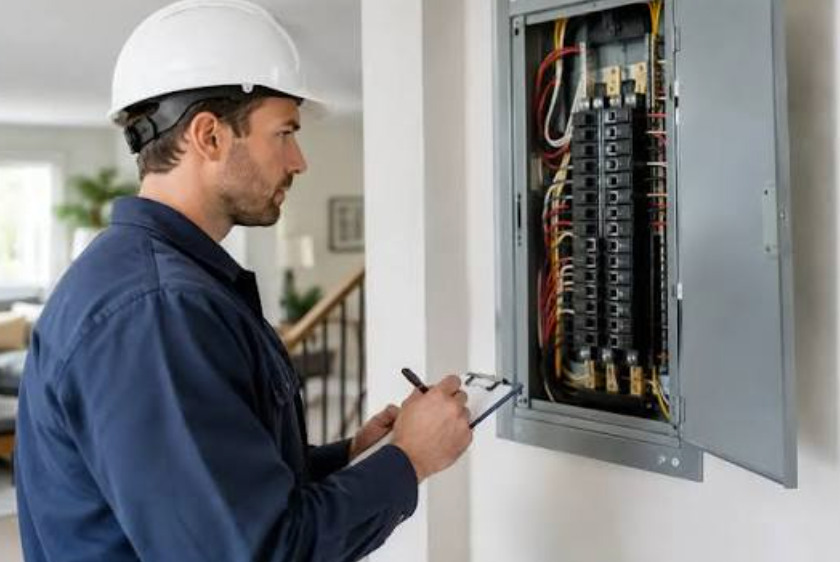
Home inspections provide buyers and property owners with information about the visible condition of a building’s major systems.
Electrical distribution equipment is commonly included in residential inspection reports because its condition can affect safety and future maintenance decisions.
Understanding how electrical panels are evaluated helps homeowners interpret findings and determine when specialized electrical assistance is necessary.
The Purpose of Electrical Evaluations During Home Inspections
A general home inspection is typically a visual, noninvasive assessment of accessible building components.
Inspectors may review electrical panel conditions, visible wiring, circuit identification, and indications of safety concerns.
However, a general inspection does not necessarily involve comprehensive electrical testing.
When defects are suspected, a qualified electrician may be recommended for further evaluation.
Common Electrical Panel Findings
Missing or Damaged Covers
Electrical enclosures require suitable protective covers and closures.
Missing components can increase the risk of accidental contact with energized parts.
Poor Circuit Labeling
Unclear circuit directories can make it difficult to identify which breaker supplies particular areas.
Accurate labeling supports safer maintenance and troubleshooting.
Signs of Corrosion
Moisture stains and corrosion may indicate environmental exposure or water intrusion.
The condition should be evaluated to determine whether equipment remains suitable for use.
Incompatible Breakers
Some inspections identify breakers that may not be approved for the installed panel.
Compatibility must be confirmed against manufacturer information and applicable listings.
Why Panel Age Is Documented
Inspectors may record the approximate age or manufacturer of electrical distribution equipment.
This information can provide context about the installation.
However, age by itself does not establish a defect.
A professional assessment should consider actual equipment condition, known product concerns, and the suitability of the installation.
Electrical Capacity and Property Purchases
Prospective homeowners often plan renovations or appliance installations after purchasing a property.
The existing electrical service should be evaluated if significant additional loads are expected.
A home inspection report may identify the visible service rating, but that information alone is not a complete load calculation.
Responding to Inspection Findings
When a report identifies potential electrical hazards, buyers and homeowners should seek clarification from a qualified electrician.
The electrician can determine whether repairs, component replacements, or broader system modifications are required.
For properties with serious distribution equipment deficiencies, electrical panel replacement Chicago may be included in the recommendations following a detailed electrical assessment.
The final decision should depend on the verified condition of the system rather than a generalized inspection statement.
Maintaining Electrical Documentation
Records of electrical permits, inspections, repairs, and equipment changes can be valuable during property transactions.
Documentation helps establish what work has been performed and may assist future electrical evaluations.
Homeowners should retain relevant records whenever significant electrical modifications are completed.
Conclusion
Electrical panel findings are an important part of residential property inspections.
Reports may identify visible deterioration, incompatible components, labeling deficiencies, and other concerns requiring professional attention.
Understanding the limits of general inspections and obtaining qualified follow-up assessments helps buyers and property owners make informed electrical safety decisions.